Key TakeawaysVolunteers are the essential workforce that keeps communities functioning, especially as U.S. volunteer participation has hit historic lows since tracking began in the early 2000s.The

Dated: September 22 2026
Views: 59
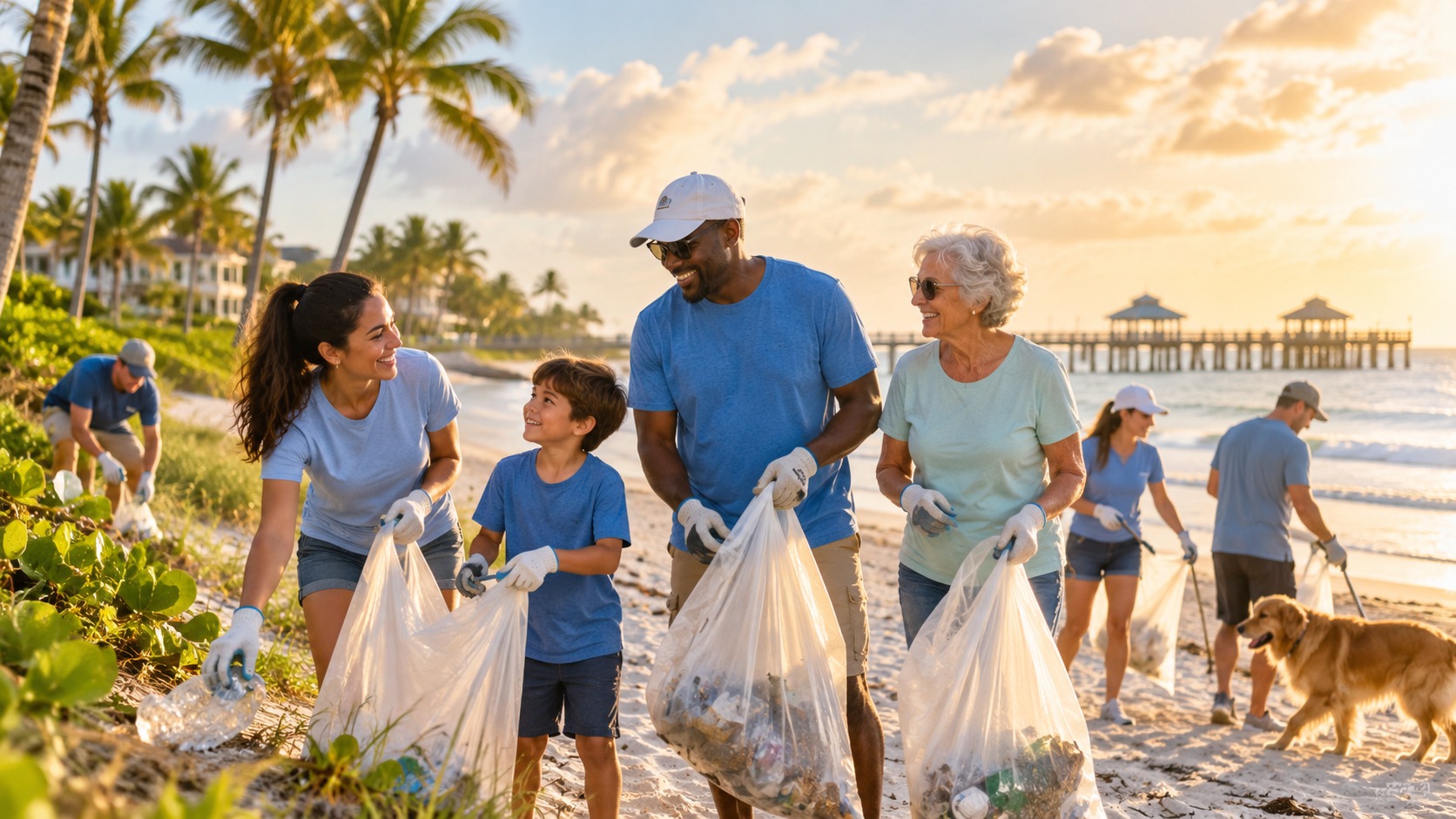
Volunteers are the essential workforce that keeps communities functioning, especially as U.S. volunteer participation has hit historic lows since tracking began in the early 2000s.
The measurable impact of volunteer work:
The Naples Baker Senior Center model demonstrates these principles in action, where volunteers create life-enhancing experiences that help seniors combat isolation while finding their own sense of purpose and community connection. Why volunteers matter is urgent to consider. The United States faces volunteer participation rates at historic lows since tracking began in the early 2000s[19]. Every person who chooses to volunteer makes a greater impact on their community. Research shows that volunteer work boosts psychological well-being and reduces depression symptoms. It also encourages stronger social connections[19]. Volunteers address critical service gaps and extend nonprofits' capacity beyond individual benefits. They create bonds that strengthen communities.
In this piece, we'll explore what volunteers do in communities and why they matter to nonprofits and organizations. We'll also look at how volunteers help the community through ground examples from Naples' volunteer programs.
"Volunteering is an act of heroism on a grand scale. And it matters profoundly. It does more than help people beat the odds; it changes the odds." — Bill Clinton, Former President of the United States.
Volunteer contributions span multiple dimensions of community work. Each addresses different needs and requires distinct skill sets.
Direct service positions volunteers on the front lines of community needs. These roles involve face-to-face interaction with community members and address immediate challenges through hands-on assistance[20]. Volunteers tutor children struggling with reading comprehension. They serve meals at homeless shelters and lead museum tours for school groups. Volunteers provide companionship to patients during extended hospital stays in healthcare settings[21]. Environmental projects attract volunteers who clear invasive species from public parks or plant trees in underserved neighborhoods. The defining characteristic remains the immediate and visible impact of these efforts.
Trained and coordinate group activities. These volunteers lead educational workshops in schools and manage role models during diversity training sessions. They also run business development courses for entrepreneurs; facilitators guide structured learning experiences[2][3]. A facilitator maintains overall responsibility for workshop delivery and liaises with institutional staff. They manage other volunteers participating in the program. Facilitators create safe spaces for children processing loss through structured and unstructured activities in grief support settings[4]. Leadership roles demand strong interpersonal skills. You must know how to direct group dynamics while keeping program objectives intact.
Behind every successful community program sits a network of volunteers handling paperwork and coordination tasks. Administrative volunteers organize digital files and schedule medical appointments for refugee families. They assist clients with school enrollment documentation[22]. They update resumes for job seekers and maintain resource libraries. These volunteers answer phones in agency offices[23]. These roles require attention to detail and proficiency with standard office software. You must know how to manage multiple concurrent tasks. The work rarely garners public recognition but proves vital for organizational function.
Volunteers extend organizational reach by educating communities about available services and mobilizing public engagement. They distribute flyers about farmers market programs for SNAP recipients and coordinate demonstrations on policy issues. Volunteers speak at community meetings about eco-friendly living practices[6][20]. Through these efforts, volunteers bridge gaps between service providers and community members who need assistance. They create awareness that transforms into action.
Communities face resource constraints that leave critical needs unmet, especially when government funding falls short and nonprofit budgets stretch thin. Volunteers step into these gaps and provide services that would otherwise remain unavailable.
The scale of volunteer contributions becomes clear when we get into the numbers. Volunteers working with older adult services contributed in 2019, representing approximately $1.70 billion in economic value over 62 million hours[1]. Volunteers provided over half of the total annual labor for federally funded aging services that year[1]. Many programs serving seniors, people with disabilities, and family caregivers would cease operations without this unpaid workforce. We cannot hire enough paid staff to match this capacity.
Formal volunteering reduces loneliness through structured social interaction. Research shows that higher-intensity volunteering exceeding 100 hours per year reduces loneliness risk[7]. These connections matter because volunteers gain a sense of purpose and belonging while feeling valued for their community contributions[7]. The health benefits extend beyond social wellness to include improved self-rated health and better psychological well-being[7].
Volunteer participation creates ripple effects throughout communities. In national elections, volunteering increases the probability of voting by 12 percentage points [8]. Volunteering in one year increases the likelihood of joining community groups or organizations by 24.4 percentage points the following year[8]. These patterns demonstrate how service fosters broader civic participation.
Elderly individuals, homeless populations, and people with disabilities rely on volunteer support[9]. Volunteers often respond first during crises and help vulnerable groups survive despite personal risks[10]. Volunteers extend services to marginalized populations who might otherwise remain isolated from community resources through targeted assistance.
"Volunteers don't get paid, not because they're worthless, but because they're priceless." — Sherry Anderson, Author and speaker
Nonprofits operate under constant pressure to deliver more services with fewer resources. Volunteers solve this capacity challenge in ways that shape organizational success.
The numbers tell a story about the necessity of volunteers. We found that 75% of nonprofit respondents identify volunteers as important to deliver core tasks[11]. 43% of nonprofits function as all-volunteer organizations with zero paid staff[11]. Volunteers allow us to provide more attention to people we serve, a benefit that 65.6% of nonprofit CEOs now recognize[12]. This labor extends our reach beyond what small paid teams could achieve alone. Programs that would otherwise remain theoretical become possible.
Skills-based volunteering transforms how we build organizational capacity. Skilled volunteers are a powerful resource for building capacity; 92% of nonprofits report[13], according to research. These volunteers share professional expertise in areas like marketing, IT, finance, and strategy[14]. A nonprofit providing legal services gains pro bono attorneys. Environmental organizations access volunteers with science and engineering backgrounds[15]. Fresh viewpoints from these skilled contributors generate new approaches to persistent problems.
Volunteers create financial breathing room by donating time instead of requiring salaries. We allocate funds that would cover staffing toward program delivery and community outreach instead[15]. On top of that, research shows that 85% of volunteers also donate financially to organizations they serve[16]. This creates a dual benefit stream that strengthens our revenue base.
Volunteers function as ambassadors because they choose our missions without compensation[11]. This positions them as ideal fundraisers who speak from commitment rather than professional obligation. They build trust and reach community members in ways paid staff cannot replicate. Personal networks strengthen our community bonds.
Baker Senior Center Naples shows why volunteers matter to nonprofits through its detailed approach to serving adults 60 and older in Collier and southern Lee counties. The center provides confidence and connection to seniors, whatever their background, religion, beliefs, or financial status[5]. Volunteers must meet specific requirements. Applicants need to be 18 or older and complete an online application. They must pass Level 2 background checks with fingerprinting and commit to a minimum six-month term[5].
The center offers different opportunities that match various skill sets. Volunteers assist professional staff working with older adults with early- to mid-stage dementia. They help through computer games, memory activities, chair exercises, and music and art therapies, as well as meal service[5]. Additional roles include entertainment performers and program leaders supporting exercise classes and book clubs. Food pantry assistants maintain inventory, discard expired items, and deliver grocery bags to participating seniors[5].
Noreen Peters exemplifies how volunteers help the community while gaining personal rewards. She began volunteering nearly two and a half years ago as a Wednesday lunch table hostess. She expanded into respite care, tour guiding, food pantry work, and teaching crochet quickly[5]. Noreen found renewed purpose and fulfillment through her service[5]. Research confirms that volunteering increases functioning. Older age and altruistic motivations increase benefits most consistently and reduce mortality[17].
The center's staff and volunteers deliver life-enhancing experiences in a safe environment. They help people curb loneliness and isolation while providing socialization and support needed to age safely in place[18].
Volunteers represent the backbone of thriving communities like Naples and fill service gaps that paid staff cannot cover. We need volunteers now more than ever as participation rates reach historic lows. Every hour you contribute makes a real difference, strengthens social bonds, and extends nonprofit capacity. You gain purpose and connection when you help others. Your community needs your unique skills and viewpoint. Start volunteering today and become part of the solution.
Where Experience Matters Most
Real estate websites can provide property information, but information alone does not make a real estate decision.
Experience becomes particularly valuable when evaluating value, comparing properties, structuring offers, interpreting market activity, responding to inspection issues, solving transaction problems, and negotiating.
Frequently Asked Question: Do I still need a real estate agent when buying in Naples?
Online information is useful, but professional representation can provide market interpretation, negotiation, transaction management, and local insight that a property-search website cannot.
Q1. Why is volunteer work important for the community? Volunteer work fills critical service gaps that government funding and nonprofit budgets cannot cover alone. Volunteers contribute billions of dollars in economic value through their unpaid labor, enabling essential services for seniors, vulnerable populations, and underserved communities. Beyond direct service delivery, volunteering builds social connections, reduces isolation, and creates a culture of civic engagement that strengthens the fabric of the community.
Q2. What are the main benefits of volunteering? Volunteering offers multiple benefits, including improved mental and physical health, with research showing reduced depression, lower stress levels, and increased longevity. Volunteers gain a sense of purpose, belonging, and meaning while developing new skills and expanding their professional networks. Additionally, volunteering creates stronger social connections, combats loneliness, and increases civic participation such as voting and joining community organizations.
Q3. What can volunteers do to help their community? Volunteers contribute through diverse roles, including direct service activities like tutoring children and serving meals; program leadership such as facilitating workshops and educational sessions; administrative support, including scheduling and documentation; and outreach efforts that raise awareness about community services. These varied opportunities allow volunteers to match their skills and interests with community needs.
Q4. How does volunteering create stronger communities? Volunteering builds social capital by bringing together people from different backgrounds, ages, and socioeconomic levels to work toward common goals. This creates networks of trust and shared values that prove essential during crises. Communities with high volunteer engagement recover faster from disasters and economic challenges because they already have established communication networks and leadership structures.
Q5. Why do nonprofits need volunteers? Nonprofits depend heavily on volunteers to extend their organizational capacity, with 75% identifying volunteers as essential for delivering key tasks and 43% operating as all-volunteer organizations. Volunteers bring diverse professional skills in areas like marketing, IT, and strategy while reducing operational costs. They also serve as authentic ambassadors who connect organizations to the broader community and often become financial donors as well.
[1] - https://www.monami.io/articles/5-reasons-why-volunteers-are-important-to-aging-services
[2] - https://www.diversityrolemodels.org/volunteer/what-is-a-facilitator/
[3] - https://www.womenventure.org/wp-content/uploads/2023/02/Volunteer-Facilitator-Role-Description.pdf
[4] - https://ricksplacema.org/wp-content/uploads/2025/05/Volunteer-Facilitator-Job-Description.2025.pdf
[5] - https://www.bakerseniorcenternaples.org/volunteer
[6] - https://www.alexandriava.gov/Volunteer
[7] - https://link.springer.com/article/10.1186/s12889-024-17807-4
[9] - https://goldenvolunteer.com/empowering-volunteers-to-support-vulnerable-populations/
[10] - https://www.un.org/en/global-issues/volunteerism
[11] - https://independentsector.org/blog/volunteers-essential-part-of-nonprofit-workforce/
[14] - https://www.councilofnonprofits.org/running-nonprofit/employment-hr/volunteers
[17] - https://pmc.ncbi.nlm.nih.gov/articles/PMC10159229/
[18] - https://www.bakerseniorcenternaples.org/
[19] - https://www.reachlink.com/advice/current-events/national-volunteer-week/
[20] - https://www.galaxydigital.com/blog/direct-service-volunteers
[21] - https://www.idealist.org/en/careers/what-kinds-of-volunteer-opportunities-exist
[22] - https://www.rescue.org/volunteer/administrative-support-volunteer-0
[23] -https://www.dfps.texas.gov/Community/Volunteer/Opportunities/administrative.asp

Your Luxury REALTOR®, Trusted Advisor — Quintessential Naples Team at Downing-Frye Realty®Michael "Mike" Downer is the REALTOR® you want in your corner when buying or selling real es....
Key TakeawaysVolunteers are the essential workforce that keeps communities functioning, especially as U.S. volunteer participation has hit historic lows since tracking began in the early 2000s.The
Key TakeawaysNaples local musicians are the community's cultural architects, transforming everyday spaces into vibrant gathering places and creating economic value that extends far beyond
Key TakeawaysAve Maria offers a distinctive blend of faith-based heritage, world-class art, and authentic community experiences that set it apart from typical Naples tourist destinations.Marvel at M
Key TakeawaysThe Vanderbilt Farmers Market represents more than just a shopping destination—it's a thriving community hub where sustainable living, local agriculture, and Naples culture
 All information regarding a property for sale, rental or financing, school information and public tax records is from sources deemed reliable; PROVIDED, HOWEVER, that representations and warranties are not made about the accuracy thereof, and such information is subject to errors, omissions, updates, modifications, changes of price, rent rates, commissions, prior sales, leases or financing, changes in school boundaries, or withdrawal without notice. All information displayed on this Website should
be independently verified if any person intends to engage in a transaction based upon such information.
Show More...
All information regarding a property for sale, rental or financing, school information and public tax records is from sources deemed reliable; PROVIDED, HOWEVER, that representations and warranties are not made about the accuracy thereof, and such information is subject to errors, omissions, updates, modifications, changes of price, rent rates, commissions, prior sales, leases or financing, changes in school boundaries, or withdrawal without notice. All information displayed on this Website should
be independently verified if any person intends to engage in a transaction based upon such information.
Show More...
 © 2026 Florida Gulf Coast MLS (FGCMLS) Information deemed reliable, but not guaranteed. The IDX data relating to real estate for sale on this web site comes in part from the Florida Gulf Coast Multiple Listing Service. The information being provided is for consumers' personal, non-commercial use and may not be used for any purpose other than to identify prospective properties consumers may be interested in purchasing. Information is deemed reliable but not guaranteed.
 This data is up-to-date as of September 22, 2026 5:33 PM UTC Some properties that appear for sale on this website may subsequently have sold and may no longer be available. For the most current information, contact Downing-Frye Realty.
The information provided is for consumers' personal, non-commercial use and may not be used for any other purpose. The data relating to real estate for sale on this website comes in part from the Broker Reciprocity Program (BR Program) of M.L.S. of Naples, Inc.,
Florida Gulf Coast MLS, Marco Multi-List, Inc., My Florida Regional MLS, or Miami Association of Realtors. Properties listed with brokerage firms other than Downing-Frye Realty are marked with the BR Program Icon or the BR House Icon and detailed information about them includes the name of the listing brokers. The properties displayed may not be all the properties available through the BR Program. The data provided by the Broker Reciprocity Program, and the Information is Deemed Reliable But Not Guaranteed. The source of the information about real property available for sale or rent is the copyrighted and proprietary database of the M.L.S. of Naples, Inc., Florida Gulf Coast MLS, Marco Multi-List, Inc., My Florida Regional MLS, or Miami Association of Realtors. Copyright 2026 M.L.S. of Naples, Inc., Florida Gulf Coast MLS, Marco Multi-List, Inc., My Florida Regional MLS, Miami Association of Realtors.; all rights reserved.
Show More...
This data is up-to-date as of September 22, 2026 5:33 PM UTC Some properties that appear for sale on this website may subsequently have sold and may no longer be available. For the most current information, contact Downing-Frye Realty.
The information provided is for consumers' personal, non-commercial use and may not be used for any other purpose. The data relating to real estate for sale on this website comes in part from the Broker Reciprocity Program (BR Program) of M.L.S. of Naples, Inc.,
Florida Gulf Coast MLS, Marco Multi-List, Inc., My Florida Regional MLS, or Miami Association of Realtors. Properties listed with brokerage firms other than Downing-Frye Realty are marked with the BR Program Icon or the BR House Icon and detailed information about them includes the name of the listing brokers. The properties displayed may not be all the properties available through the BR Program. The data provided by the Broker Reciprocity Program, and the Information is Deemed Reliable But Not Guaranteed. The source of the information about real property available for sale or rent is the copyrighted and proprietary database of the M.L.S. of Naples, Inc., Florida Gulf Coast MLS, Marco Multi-List, Inc., My Florida Regional MLS, or Miami Association of Realtors. Copyright 2026 M.L.S. of Naples, Inc., Florida Gulf Coast MLS, Marco Multi-List, Inc., My Florida Regional MLS, Miami Association of Realtors.; all rights reserved.
Show More...
