2 Bedrooms | 2 Bathrooms | Fairways 2 at Marco ShoresPresented by Mike Downer, Broker Associate | Downing-Frye Realty | Quintessential NaplesWhat If Tuesday Morning Looked Like This?Picture this

Dated: September 24 2026
Views: 97
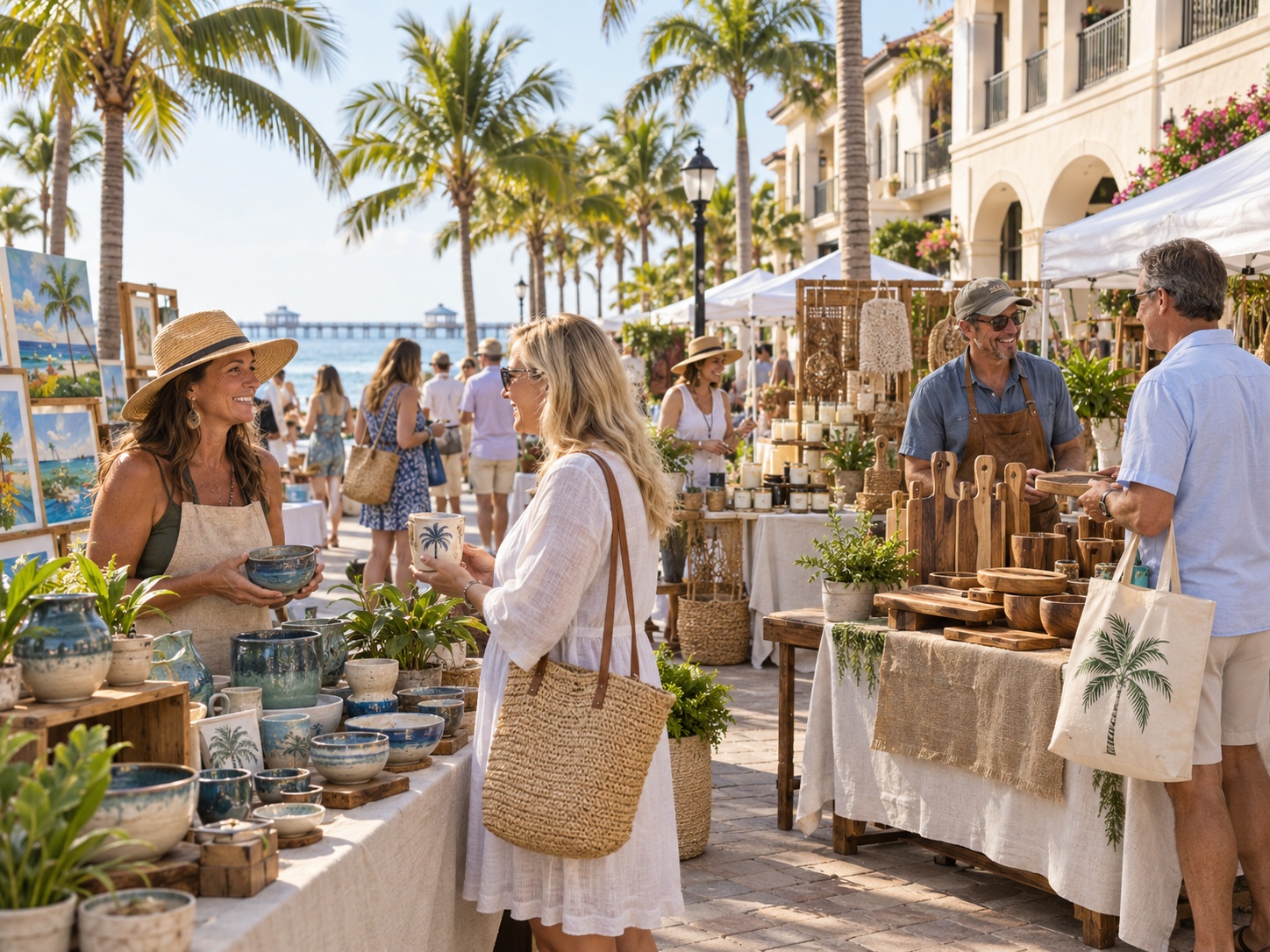
Supporting Naples artisans creates a powerful economic multiplier effect that strengthens the entire community while preserving cultural heritage and protecting the environment.
The path to a sustainable local economy runs through your purchasing decisions. By choosing Naples artisans for gifts, home goods, and everyday items, you're investing in economic resilience, environmental sustainability, and cultural preservation—benefits that compound with each transaction and strengthen our community for future generations. Local economies that support small producers exhibit stronger growth and resilience to global market shocks[5]. Naples artisans play a vital role in building this economic strength. When we buy from local craftspeople, our money circulates within the community rather than flowing to distant corporations. This creates a ripple effect that funds schools and infrastructure through tax revenue[5]. Supporting Naples artisans preserves cultural heritage, reduces environmental impact, and strengthens community bonds beyond economics. In this piece, we'll explore how the Naples Artisans Guild and Naples Artisans Plaza, FL contribute to our local economy. We'll also cover the environmental benefits of local production and show you practical ways to support artisans in Naples, NY in your daily life.
Within our community, for every dollar spent at a Naples artisan business, compared to just 43 cents when shopping at chain stores, approximately 67 cents remains[23]. This phenomenon, known as the local multiplier effect, creates a powerful cycle of prosperity. Dollars that recirculate locally multiple times before leaving the economy increase their impact significantly. Studies comparing local retailers to national chains found that $100 spent returns about $ 45 locally to the community, three times more than the $15 returned by national retailers[24].
The arts and culture sector in Collier County, which has Naples artisans, gets $147 million in economic activity annually[25][26]. This spending breaks down into $102 million by arts organizations and $45 million by audiences who dine, shop, and stay in hotels when attending events[26]. 40.9% of these attendees are nonlocal visitors, with 45.1% reporting that arts events are their primary reason to travel here[26].
Naples artisans and the broader arts sector support 1,948 jobs in our community[26]. Small businesses have created 12.9 million new jobs nationally over 25 years, representing 66% of all employment growth[23]. Artisan businesses prove valuable because they create labor-intensive positions that cannot be outsourced. These roles extend beyond artists and include box office staff, web designers, accountants, maintenance workers, and other occupations[26].
Moreover, the sector benefits from 1,526 volunteers contributing 46,770 hours valued at $1.4 million[26]. This volunteer participation strengthens community bonds while supporting business operations.
Artisans guild Naples operations reinforce interconnected local supply networks. Small producers source materials and services locally, creating relationships that build economic resilience. An artisan might purchase supplies from nearby vendors, maintain accounts with local credit unions, and hire local service providers[5]. Crafts have been recognized internationally as drivers of business networks and supply chains, functioning as engines of money circulation in local economies[6].
Nonprofit arts organizations in Naples received $29.4 million in local, state, and federal tax revenues[26]. Resident household income from arts employment totaled $106.8 million[26]. These figures demonstrate how artisans plaza Naples FL and similar ventures fund schools, emergency services, and infrastructure through property taxes, sales taxes, and payroll contributions.
Traditional craftsmanship represents the most tangible demonstration of intangible cultural heritage[7]. Naples artisans preserve skills through age-old apprenticeship systems where knowledge passes from experienced makers to new learners[7]. This transfer focuses on the skills and knowledge involved in craftsmanship rather than the finished products themselves[7]. Safeguarding efforts focus on encouraging artisans to continue producing craft and passing their expertise on to others within their communities[7].
Mastery of traditional techniques requires years of practice. Artisans create items that are functional and aesthetically compelling[3]. These techniques vary by cultural background and available materials, and they reflect Naples' cultural heritage [3]. Each crafted item showcases the artisan's skill while carrying cultural significance. The items often preserve traditions or tell stories specific to our region[3].
Craft guilds play a vital role in preserving traditional practices, supporting makers and sustaining community-based knowledge[4]. Artisans Guild Naples functions similarly and requires a lifetime commitment to particular trades. This ensures artisans develop immense skill and expertise passed down through generations[8]. The guild encourages community and collaboration. Artisans learn from one another, share techniques, and improve the quality of their craft [8]. Guilds provide structured frameworks of rules, customs, and responsibilities. They ensure artisans receive training, guidance and support[8].
Handmade objects carry traces of human time, regional tradition, and individual skill that factory items cannot replicate[9]. Objects transform from commodities into carriers of stories when audiences involve Naples artisans[10]. These narratives travel with objects into homes and daily lives. They create ongoing relationships to the places and people who created them[10]. Craft provides tangible connections to human creativity and place at a time when many feel disconnected from how things are made[10].
of total U.S. greenhouse gas emissions, making it the largest contributor to the nation's carbon footprintTransportation accounts for 28 percent[11]. Direct support of Naples artisans addresses this problem. Small-scale local supply chains can emit up to three times fewer carbon emissions compared to conventional, long-distance ones[2]. A study exploring Iowa vegetable production found that local production used only 10 percent of the water compared to conventional food systems and generated less than half the emissions[1].
Products travel miles instead of thousands when you purchase from Artisans Plaza Naples FL. This eliminates carbon-heavy shipping methods and refrigeration during transport. Excessive packaging materials are also eliminated[12].
Many Naples artisans rely on raw materials sourced from their surroundings. This reduces carbon emissions associated with transportation[13]. Natural materials like clay, wool, hemp, and reclaimed wood form the foundation of local craft production. Artisans reduce their carbon footprint by using materials that are sourced and harvested sustainably. They also help preserve traditional techniques[14].
Traditional craft techniques such as hand weaving and plant-based dyeing require less energy than industrial methods[13]. Hand-powered processes and natural materials reduce energy needs. Toxic waste entering the environment is avoided[15].
Small-batch production by artisan guild operations in Naples minimizes waste by matching supply with demand[16]. Items are made when ordered. This reduces overproduction and landfill contributions[16]. Artisans employ fabric remnants and recycle materials to limit waste in their workshops[13].
Artisanship involves giving form and meaning to local natural resources[17]. Clay, an abundant and available material, has been used sustainably for centuries. Wool, jute, and other regional materials create products rooted in place. This promotes connections between makers, materials, and the Naples community.
Artisan markets function as dynamic spaces where creativity meets commerce. They seek local products. One in three shoppers[18] seek local products, and these markets satisfy that need while building community bonds. Outdoor artisan markets increase excitement, forge connections, and boost local economic development through creative placemaking[19]. These spaces allow artists to share their creations while people connect, attracting residents and visitors to downtown areas [19].
Face-to-face interactions transform transactions into relationships. Meet artisans and Naples, NY craftspeople, and learn their stories, creative processes, and the values behind each piece[20]. This personal connection helps you understand the gap their products fill in the market[20]. Better communication between customers and artisans guild Naples members results in customized gifts perfect to mark special occasions[21].
Workshops at schools, libraries, and community centers revive local craft traditions[21]. Skills native to our region breathe new life into disappearing arts and build support for small businesses[21]. These sessions provide stress relief while building practical abilities[22].
Visit local artisan stalls regularly, even without purchasing. Your presence encourages makers and attracts curious shoppers[21]. Boost social media posts to help others find artisan work[21]. Think of Naples artisans first to source corporate gifts, weddings, and party favors[21]. Display locally sourced work in business spaces to echo community values[21].
Supporting Naples artisans strengthens our local economy and preserves cultural heritage. Choosing local craftspeople over distant corporations keeps money circulating within our community. It also reduces carbon emissions and waste. The choice is simple: visit artisans plaza Naples FL, shop at guild markets, and prioritize local makers next time you need something. Your decision to buy local today creates benefits for generations tomorrow.
Selling Luxury Real Estate in Naples
Luxury properties require thoughtful positioning. Sellers should understand competing inventory, recent sales, buyer expectations, property presentation, photography, marketing, pricing, and likely buyer objections before going to market.
A successful strategy should clearly answer one question: Why should a qualified buyer choose this property over the alternatives?
Frequently Asked Question: How do you market a luxury home in Naples?
Luxury marketing should combine accurate positioning, exceptional presentation, professional photography, broad exposure, targeted promotion, market analysis, and continuous evaluation of buyer response.
Q1. How much of my money stays in the community when I buy from local artisans? When you purchase from Naples artisans, about 67 cents of every dollar stays in the local community, compared to just 43 cents when shopping at chain stores. This creates a powerful multiplier effect: money circulates locally multiple times, amplifying its economic impact.
Q2. What is the economic contribution of arts and artisans to the Naples area? The arts and culture sector in Collier County generates $147 million in economic activity annually, supports 1,948 jobs, and produces $29.4 million in local, state, and federal tax revenues. This funding helps support schools, emergency services, and community infrastructure.
Q3. How do local artisans help reduce environmental impact? Local artisan production significantly reduces carbon emissions by eliminating long-distance transportation, which accounts for 28% of U.S. greenhouse gas emissions. Small-scale local supply chains can emit up to three times fewer carbon emissions than conventional systems, and artisans often use sustainable, locally-sourced materials with traditional, low-energy production methods.
Q4. Why is buying from artisans important for preserving cultural heritage? Artisans preserve traditional craft techniques passed down through generations via apprenticeship systems. Each handcrafted item carries cultural significance and tells stories specific to the region, maintaining skills and knowledge that might otherwise disappear. Mass-produced items cannot replicate this tangible connection to heritage.
Q5. What are practical ways to support Naples artisans in everyday life? You can support local artisans by visiting artisan markets regularly, buying from local craftspeople for gifts and special occasions, sharing their work on social media, attending educational workshops, and displaying locally made items in your home or business. Even visiting without purchasing helps attract other shoppers and encourages makers.
[3] - https://www.vaia.com/en-us/explanations/anthropology/east-asian-studies/traditional-crafts/
[4] - https://www.maaa.org/news/applications-open-heartland-craft-guilds-capacity-support-grants/
[5] - https://localcart.net/blog/our-blog/local-artisans-and-farmers-the-heart-of-sustainable-shopping/
[6] - https://pmc.ncbi.nlm.nih.gov/articles/PMC9938480/
[7] - https://ich.unesco.org/en/traditional-craftsmanship-00057
[11] - https://www.epa.gov/transportation-air-pollution-and-climate-change/carbon-pollution-transportation
[15] - https://www.riseartisan.fund/sustainability
[17] - http://blog.culturalecology.info/2023/02/02/artisan-ecologies-2/
[18] - https://www.uschamber.com/co/start/strategy/benefits-of-local-marketing
[19] - https://www.downtownnj.com/artisan-markets/
[21] - https://blog.artisans.coop/blog/10-ways-to-support-your-local-artisans/
[23] - https://www.revfcu.com/the-ripple-effect-how-buying-local-creates-resilient-communities/
[24] - https://geo.coop/articles/why-local-multiplier-effect-always-counts
[25] - https://www.leadershipcollier.org/news/art%E2%80%99s-impact-on-the-local-economy
[26] -https://unitedartscollier.org/economic-impact-studies/

Your Luxury REALTOR®, Trusted Advisor — Quintessential Naples Team at Downing-Frye Realty®Michael "Mike" Downer is the REALTOR® you want in your corner when buying or selling real es....
2 Bedrooms | 2 Bathrooms | Fairways 2 at Marco ShoresPresented by Mike Downer, Broker Associate | Downing-Frye Realty | Quintessential NaplesWhat If Tuesday Morning Looked Like This?Picture this
Key TakeawaysNaples offers families accessible hiking adventures through diverse ecosystems, from cypress swamps to coastal beaches, with trails suitable for all ages and abilities.Essential
Key TakeawaysSupporting Naples artisans creates a powerful economic multiplier effect that strengthens the entire community while preserving cultural heritage and protecting the environment.Local
Key TakeawaysNaples, Florida, has emerged as an unexpected cultural powerhouse, offering world-class art experiences in a compact, accessible setting that rivals major metropolitan areas without the
 All information regarding a property for sale, rental or financing, school information and public tax records is from sources deemed reliable; PROVIDED, HOWEVER, that representations and warranties are not made about the accuracy thereof, and such information is subject to errors, omissions, updates, modifications, changes of price, rent rates, commissions, prior sales, leases or financing, changes in school boundaries, or withdrawal without notice. All information displayed on this Website should
be independently verified if any person intends to engage in a transaction based upon such information.
Show More...
All information regarding a property for sale, rental or financing, school information and public tax records is from sources deemed reliable; PROVIDED, HOWEVER, that representations and warranties are not made about the accuracy thereof, and such information is subject to errors, omissions, updates, modifications, changes of price, rent rates, commissions, prior sales, leases or financing, changes in school boundaries, or withdrawal without notice. All information displayed on this Website should
be independently verified if any person intends to engage in a transaction based upon such information.
Show More...
 © 2026 Florida Gulf Coast MLS (FGCMLS) Information deemed reliable, but not guaranteed. The IDX data relating to real estate for sale on this web site comes in part from the Florida Gulf Coast Multiple Listing Service. The information being provided is for consumers' personal, non-commercial use and may not be used for any purpose other than to identify prospective properties consumers may be interested in purchasing. Information is deemed reliable but not guaranteed.
 This data is up-to-date as of September 25, 2026 5:27 PM UTC Some properties that appear for sale on this website may subsequently have sold and may no longer be available. For the most current information, contact Downing-Frye Realty.
The information provided is for consumers' personal, non-commercial use and may not be used for any other purpose. The data relating to real estate for sale on this website comes in part from the Broker Reciprocity Program (BR Program) of M.L.S. of Naples, Inc.,
Florida Gulf Coast MLS, Marco Multi-List, Inc., My Florida Regional MLS, or Miami Association of Realtors. Properties listed with brokerage firms other than Downing-Frye Realty are marked with the BR Program Icon or the BR House Icon and detailed information about them includes the name of the listing brokers. The properties displayed may not be all the properties available through the BR Program. The data provided by the Broker Reciprocity Program, and the Information is Deemed Reliable But Not Guaranteed. The source of the information about real property available for sale or rent is the copyrighted and proprietary database of the M.L.S. of Naples, Inc., Florida Gulf Coast MLS, Marco Multi-List, Inc., My Florida Regional MLS, or Miami Association of Realtors. Copyright 2026 M.L.S. of Naples, Inc., Florida Gulf Coast MLS, Marco Multi-List, Inc., My Florida Regional MLS, Miami Association of Realtors.; all rights reserved.
Show More...
This data is up-to-date as of September 25, 2026 5:27 PM UTC Some properties that appear for sale on this website may subsequently have sold and may no longer be available. For the most current information, contact Downing-Frye Realty.
The information provided is for consumers' personal, non-commercial use and may not be used for any other purpose. The data relating to real estate for sale on this website comes in part from the Broker Reciprocity Program (BR Program) of M.L.S. of Naples, Inc.,
Florida Gulf Coast MLS, Marco Multi-List, Inc., My Florida Regional MLS, or Miami Association of Realtors. Properties listed with brokerage firms other than Downing-Frye Realty are marked with the BR Program Icon or the BR House Icon and detailed information about them includes the name of the listing brokers. The properties displayed may not be all the properties available through the BR Program. The data provided by the Broker Reciprocity Program, and the Information is Deemed Reliable But Not Guaranteed. The source of the information about real property available for sale or rent is the copyrighted and proprietary database of the M.L.S. of Naples, Inc., Florida Gulf Coast MLS, Marco Multi-List, Inc., My Florida Regional MLS, or Miami Association of Realtors. Copyright 2026 M.L.S. of Naples, Inc., Florida Gulf Coast MLS, Marco Multi-List, Inc., My Florida Regional MLS, Miami Association of Realtors.; all rights reserved.
Show More...
